YSO Bulletin
- June 2026 -
 The YSO Newsletter
Possible new UXOR?
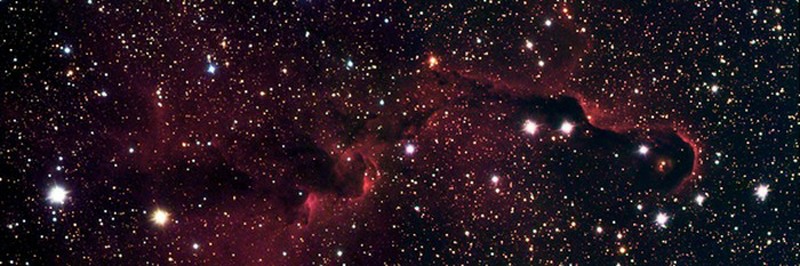
Optical spectra of the infrared source CPM 19, which exhibited a strong decline in brightness during the period from 1984–1987 to 2000–2005, have been obtained for the first time, in a study headed at the well-known Armenian observatory at Byurakan. A strong and broad Hα emission line has been detected, though no traces of an absorption spectrum are observed. It is suggested that the optical component of CPM 19 is in the pre-main-sequence stage. Various explanations of the observed properties are considered; a plausible scenario is that CPM 19 may belong to the class of UX Ori-type stars with an unusually long eclipse duration, similar to that observed in V1184 Tau. Spectra of other nebulous objects in the vicinity of CPM 19, including the HH objects HH 940 and HH 941, have also been obtained and discussed.
The objects are in the region of the galactic anticentre in Taurus (very near one of my personal favourite YSOs CQ Tau), and past studies have shown its association with an H2O maser and the presence of molecular hydrogen outflows. These observations confirmed the existence of a small star-forming region whose presence was suspected even before, when a possible Herbig–Haro object GGD 4 (or GM 2-4) was detected in this area. Further studies have shown that the CPM 19 source is located at the centre of a relatively compact infrared cluster, which indeed represents a star-forming region.
And in a Starforming Region not far away...
Protoplanetary disks around young Sun-like stars are the cradles of the vast majority of detected exoplanets. Probing these disks at multiple spatial scales is a crucial key to uncovering how planets form. A recent paper aimed to spatially and spectrally resolve the inner disk and star-disk interaction region of the M0.3 T Tauri star DO Tau by combining two complementary techniques. Using high-resolution NIR spectra and optical long-baseline interferometry, it confirmed that this half-Solar mass star is a strong accretor. The HI and HeI lines exhibit strong variability on a daily timescale, consistent with the burster classification of DO Tau derived from its K2 light curve. Together, the observations indicate an unstable accretion regime, and further suggests that most of the line flux originates from the magnetospheric accretion region and/or from an inner wind close to the magnetosphere-disk interface. The inclination derived for the inner disk (45-55°) differs from that of the outer disk (30°). This points toward a misalignment or warp of the outer disk that may originate from the suspected past encounter with the neighboring HV Tau system. The object is in the highly-productive SFR just north of τ Tauri.
Meanwhile, back in Armenia...
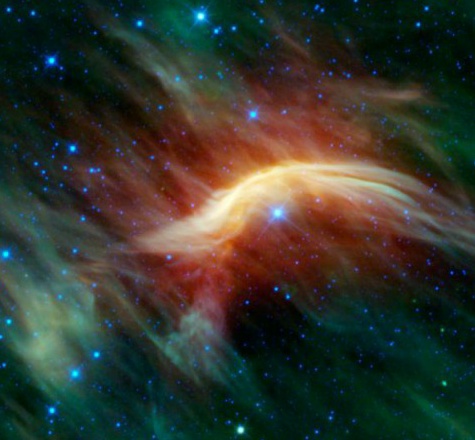 OB runaway stars are massive stars moving through interstellar space at high velocities (up to 200 km/s), produced by dynamical ejections in young massive clusters or supernova explosions in massive binaries. They can travel several hundred parsecs before exploding as supernovae, affecting the dynamical and chemical evolution of the Galaxy. The Vel OB1 association, one of the largest OB associations, hosts about 20 O-type and more than 50 B-type stars. The observers aimed to identify OB runaways in this region, quantify their number, identify their parent clusters, and understand their production channels and impact on the surrounding medium. Using Gaia DR3 coordinates, parallaxes, and proper motions, they identified OB runaways by measuring their peculiar velocities, inspecting infrared WISE images to identify wind bow shocks, and reconstructing runaway trajectories to locate parent clusters and estimate travel times.
They identified six young stellar clusters hosting most of the massive-star population in Vel OB1 (distance 1.6-2.1 kpc; age 1-10 Myr) and derived a threshold velocity of 15 km/s to classify runaways thus identifying 25 OB runaways and one F-type runaway. Also 16 arc-like features were found, six associated with runaways selected by peculiar velocity, and ten bow shocks aligned with runaway proper motions. Parent clusters are identified for seven runaways, most likely ejected dynamically. The runaway fraction is about 30%. Wind bow shocks from OB runaways reveal valuable information on local ISM conditions. I can recommend the entire paper to amateur astronomers (Some well-known stars with bow shocks are κ Cas and ζ Oph), see above.